Narrative Elements from Tiny Bookshop I Would Love to See in an Animal Crossing Game

All my friends know I'm an Animal Crossing girlie. Animal Crossing for GameCube was my first video game as a child, and I logged over 700 hours in Animal Crossing: New Horizons in 2020 and 2021.
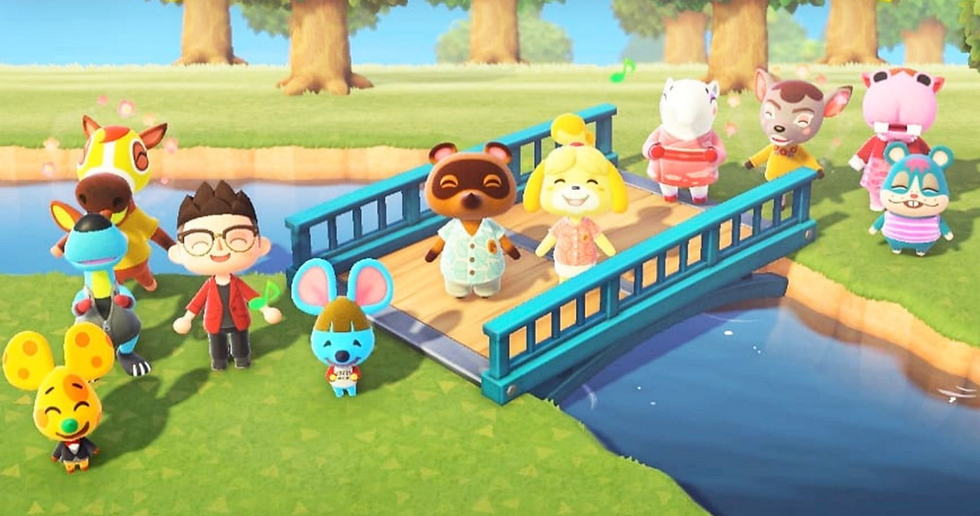
But. I crave more from Animal Crossing, especially the newest additions to the franchise. I'm exhausted with New Horizons' focus on decorating our island (which they've doubled down on in their recently announced free update) and I miss the deeper villager interactions from earlier games. But even in games like Animal Crossing: New Leaf, which I consider to be the best of the franchise, I wish there was a stronger narrative. Or at least stronger characters.
When I picked up Tiny Bookshop from Neoludic Games earlier this year, I immediately connected with some of its Animal Crossing-adjacent elements. The player character is a newcomer to an established community (which was the case in all Animal Crossing games except New Horizons) and they interact with a cast of colorful characters. But Tiny Bookshop takes their narrative a few steps further than Animal Crossing does, and I found myself daydreaming about what those extra narrative elements would look like in a mainline Animal Crossing game. So I'm gonna write about it!
NPCs have individual goals and desires, and you can help
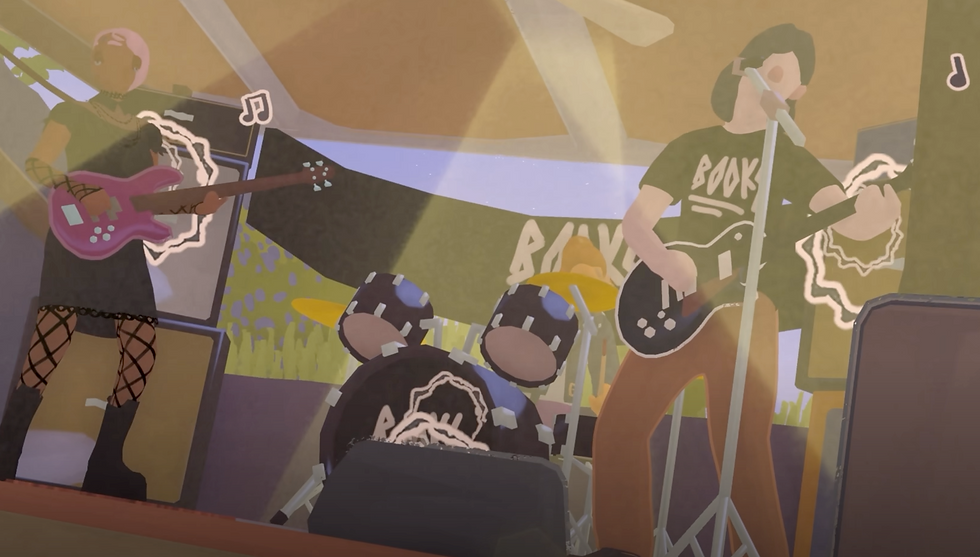
In Tiny Bookshop, each named NPC has quests you can complete with them, called memories. They come to you at the beginning of the game with a problem, and you can help solve it through the game's mechanics. For example, Klaus is a grocery store worker by day and rocker by night. But he and his band are in a bit of a slump; Klaus needs songwriting inspiration and his band needs a venue to perform. Successfully recommending books can help Klaus get his songwriting groove back, and, once you help a local theater director with his goals, you can secure Klaus's band a place to perform.
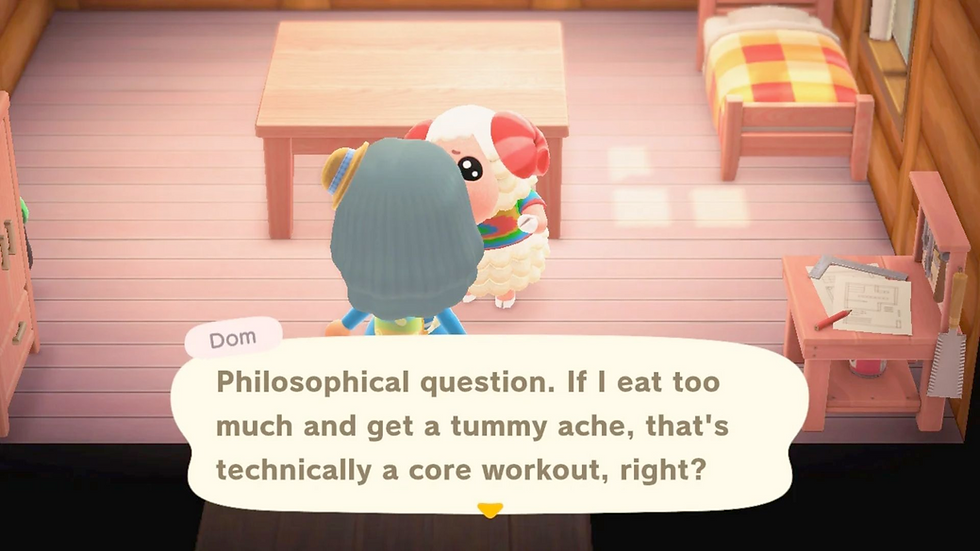
In Animal Crossing, I could see these quests incorporated into the villager favor system (which was absent from New Horizons, much to my dismay.) When the player asks a villager if they need help with anything, they'll give you a task that has meaning behind it, rather than a randomly generated task.
Obviously, Animal Crossing has hundreds of possible villagers while Tiny Bookshop has a consistent cast of NPCs, but instead of building quests for particular characters, Animal Crossing could have quests for particular personality types. Maybe any jock-type villager in your town can give you a quest to find the fish that gives him the best gains because he's training to impress his best friend, or a snooty villager tells you to ask around for the latest gossip because she's worried people are talking about her.
NPCs actually interact with each other, and sometimes their goals conflict
In Tiny Bookshop, actions you can take along quest lines for one NPC can affect the lives of others. For example, some kids who like to hang out at the old ruins on the outskirts of town will often ask you for horror recommendations, but if you indulge them, their teacher lets you know that they're struggling to pay attention in class because of all the nightmares the books are giving them. The teacher will then ask you to recommend them nature books instead. The whole quest line is pretty wholesome and conflict-free; the kids enjoy the nature books even though they asked for horror, and seemingly nothing bad happens if you just continue giving them horror to read. It's not staging a challenging moral choice for the player, just making the world feel more alive and interactive.
I could see this working well in Animal Crossing too; maybe a peppy villager wants more pink windflowers around the island, but a cranky villager can't stand the sight of the color pink and wants blue windflowers instead. (But, of course, it's not about the flowers, it's about their strained friendship!) The player can encourage them to resolve their differences by breeding pink and blue windflowers to create purple ones.

NPCs' situations and moods change throughout the year
One of my favorite plot lines of Tiny Bookshop is when Tilde is in the hospital for a few weeks, and the player can visit her, bringing items to keep her entertained while she recovers. It's one of the things Tiny Bookshop does well–creating the feeling of time passing through meaningful events and life changes.
Animal Crossing tries to do this too; we celebrate holidays with our villagers periodically to mark the passage of time. But nothing actually changes in an Animal Crossing town or island–not unless the player makes it so. Maybe a villager gets injured and everyone chips in to visit them and bring them food, or maybe Timmy and Tommy grow up and one of them gets a job off-island while the other sticks around to run Nook's Cranny solo.

Look, I made notes to write a bunch more of these points, but I think you get the idea. I crave an Animal Crossing with NPCs that feel more lifelike and quest lines that make you feel more like a part of a community than the ruler of it. Though I doubt Nintendo will take the series in that direction, I still enjoy daydreaming about what could be.